Physical Address
304 North Cardinal St.
Dorchester Center, MA 02124
Physical Address
304 North Cardinal St.
Dorchester Center, MA 02124



Choosing between a 20V and a 40V electric leaf blower often feels like choosing between portability and brute force. The voltage label matters — but it isn’t the only story. If you want a blower that actually fits your life, it helps to look beyond the number and focus on how you’ll use it, real performance data, and a few practical tests you can run the moment you unbox your unit.
Below is a concise, human-friendly guide that explains the real differences, shows when each type shines, and gives hands-on buying tips so you won’t regret your purchase.
| Feature | 20V (Typical) | 40V (Typical) |
|---|---|---|
| Positioning | Lightweight, portable | Heavy-duty, high output |
| Power | ~ <300W | ~ >500W |
| Runtime | 10–40 minutes | 30–120 minutes (battery dependent) |
| Weight (with battery) | <2 kg | >3 kg |
| Best for | Balconies, car cleaning, short jobs | Large yards, wet/heavy leaves, commercial tasks |
| Pros | Easy to store, single-hand use | Faster for big jobs, sustained power |
| Cons | Struggles with wet leaves/large piles | Heavier, more tiring for long handheld use |
The core difference between 20V and 40V electric leaf blowers stems from voltage’s impact on the power system: the 20V model is positioned around “portability and practicality,” with lower voltage enabling a smaller battery and lighter body, ideal for daily light cleaning. The 40V model, by contrast, is designed for “high efficiency and heavy-duty use,” where higher voltage supports stronger power output for heavy cleaning.
In basic attributes, 20V models typically have power under 300W, runtime of 10-40 minutes, and weight (including battery) under 2kg. 40V versions, however, usually exceed 500W in power, offer 30-120 minutes of runtime, but often weigh over 3kg, reducing operational flexibility. These differences directly guide consumers to choose based on specific needs.
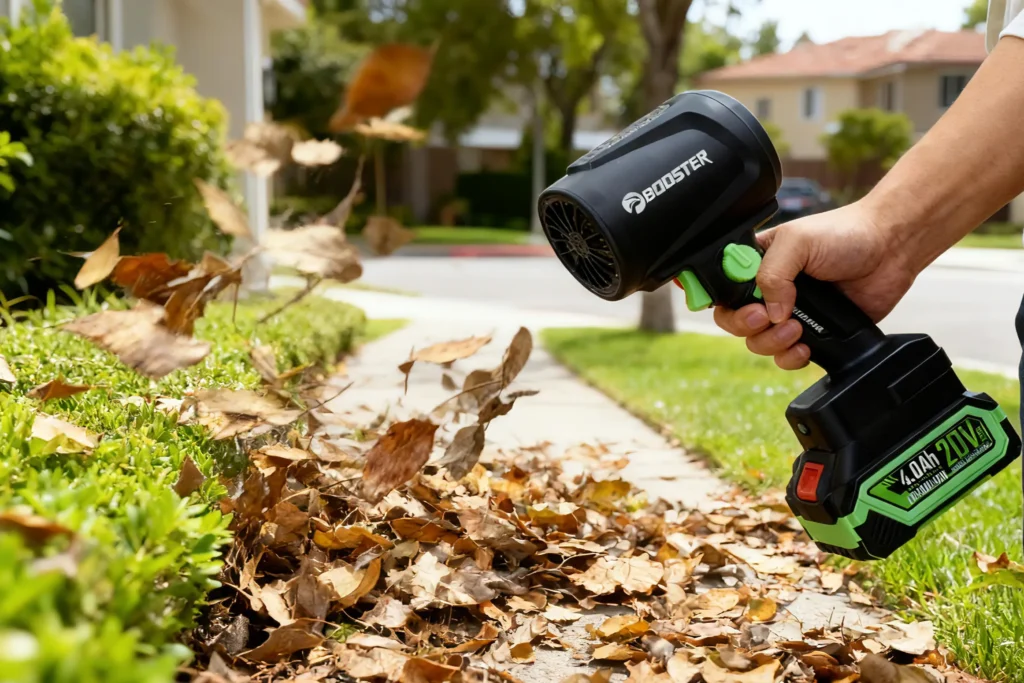
Voltage directly dictates the power output and user experience of an electric leaf blower. The 20V model features a compact battery design, with a bare unit weighing less than 500g for effortless one-handed use—perfect for dusting small apartments or cleaning car interiors. Yet with power mostly below 300W and runtime of 10-30 minutes, it may struggle with wet leaves or large-area courtyard cleaning.
The 40V version is tailored for heavy-duty tasks. Equipped with 4-8Ah battery capacity and power over 500W, it handles thick courtyard leaves and factory dust easily. However, higher voltage leads to a heavier body (around 3.8kg with battery) and longer charging times (1-2 hours), causing fatigue during prolonged use and requiring more storage space. Notably, some innovative models achieve 600W high power at 20V through technical optimizations, delivering 1300G wind pressure—retaining portability while matching 40V performance.
Voltage helps determine the potential electrical power available to the motor, but real-world performance depends on motor design, battery capacity (Ah), and airflow engineering.
20V units are compact and ideal for quick, light tasks. They’re great when storage, portability, and convenience matter most.
40V units deliver stronger, longer-lasting airflow and are better for large or heavy-duty jobs. They take longer to charge and are heavier to hold.
Some high-quality 20V blowers, thanks to refined brushless motors and optimized air channels, can briefly match the wind pressure of 40V models — but sustained heavy work still favors higher-voltage systems.
The 20V model is ideal for urban apartment dwellers. Its compact size eases storage, and it suits cleaning balcony leaves, window sill dust, and car interiors—short runtime meets daily light needs. The 40V version, though, fits villa courtyards, outdoor venues, or commercial settings: its strong wind tackles large-area leaf removal and heavy snow quickly, but it’s less portable.
A truly high-quality electric leaf blower breaks scenario limits. With stepless speed regulation, wind speed adjusts flexibly between 60-1300G, handling home dusting, courtyard cleaning, factory dust removal, and car cleaning with one machine. Paired with a replaceable lithium battery, it offers 12-100 minutes of runtime, eliminating power concerns for both quick and deep cleaning, and meeting home and commercial needs.
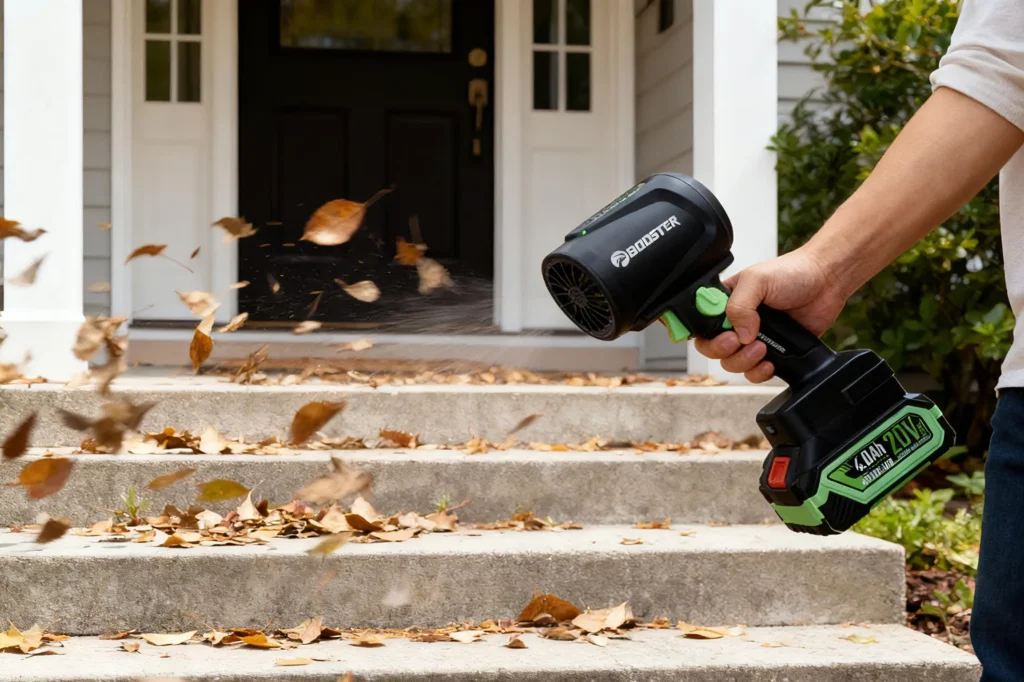
Beyond voltage, core configurations matter when buying an electric leaf blower. For motors, an aero-model dedicated high-speed brushless motor reduces noise, extends service life (up to 3000 hours), reaches 45,000 RPM, and ensures stable output—used in high-demand fields like aerial drones. Safety design is crucial too: grid protection prevents accidental contact, suiting families with the elderly and children.
Portability and runtime are equally important. A lightweight body (about 1.05kg with battery) ensures comfort during long use, while a replaceable lithium battery with universal Makita interface boosts flexibility. Additionally, balance between fast charging (21V 2A charger, full in ~4 hours) and long runtime minimizes waiting, keeping it ready and making it a reliable efficient cleaning helper.
These simple checks catch many surprising mismatches between specs and everyday use.
There is no absolute superiority between 20V and 40V electric leaf blowers. For light tasks, the 20V portable model works well; for heavy needs, the 40V high-power version is better.
But if you want all-scenario adaptability and balanced performance, a high-quality electric leaf blower that breaks voltage limitations is worth considering—it delivers power comparable to high-voltage models while keeping the lightweight convenience, making cleaning efficient and effortless.
Reference Links:https://leafblowerspro.com/20v-40v-electric-leaf-blower-key-differences/